- Home
- About Us
- Product
Safety Solution
Packaging Solution
Identification solution & Storage
Renewable Energy Solution
- Our Services
- Certifications & Quality
- Infrastructure
- Contact Us
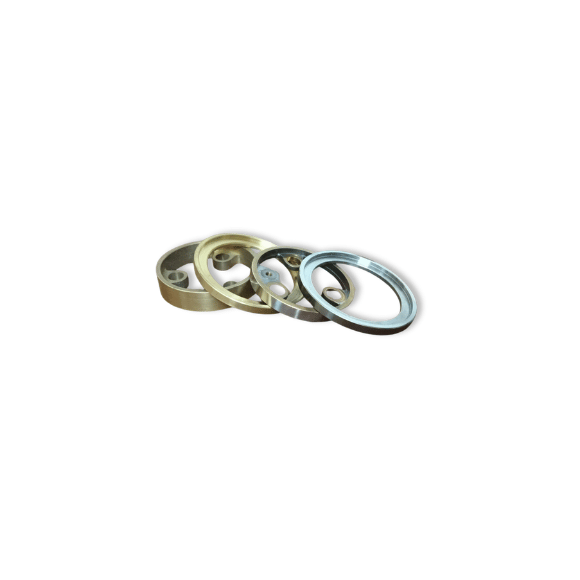
Slip Rings are electromechanical devices designed to transfer electrical power, control signals and data between stationary and rotating parts of a wind turbine. They support continuous rotation while maintaining stable and reliable electrical connectivity. In wind turbines, slip rings are commonly used for blade-pitch control, hub communication, generators and power-transfer systems. They can be customised with different circuit combinations, current ratings, signal interfaces, protection levels and mounting arrangements.
| Product Name | Slip Rings |
|---|---|
| Product Type | Power Slip Ring, Signal Slip Ring, Pitch-Control Slip Ring, Hub Slip Ring or Custom Slip Ring Assembly |
| Transmission Type | Electrical Power, Control Signals, Data and Communication Signals |
| Number of Circuits | Customised according to power, signal and communication requirements |
| Current Rating | Application-specific rating based on circuit design and load requirements |
| Voltage Rating | Low-, Medium- or application-specific voltage configuration |
| Signal Options | Analogue, Digital, Encoder, Control and Sensor Signals |
| Communication Options | CAN Bus, Ethernet, RS485, Profibus or Custom Interface |
| Contact Technology | Carbon Brush, Fibre Brush, Precious-Metal Contact or Custom Technology |
| Ring Material | Copper Alloy, Brass, Silver-Plated Alloy or Application-Specific Material |
| Housing Material | Aluminium, Stainless Steel, Coated Steel or Engineering Polymer |
| Rotational Speed | Designed according to wind turbine operating-speed requirements |
| Mounting Type | Flange-Mounted, Shaft-Mounted, Through-Bore or Custom Mounting |
| Bore Configuration | Solid Shaft, Hollow Shaft, Through-Bore or Custom Bore Design |
| Protection Rating | IP54, IP55, IP65 or application-specific protection level |
| Operating Temperature | Customised according to turbine location and environmental conditions |
| Environmental Resistance | Designed for Dust, Moisture, Vibration and Temperature Variations |
| Electrical Performance | Stable Signal Transmission, Low Contact Resistance and Reliable Power Transfer |
| Maintenance Options | Maintenance-Free or Serviceable Design, depending on contact technology |
| Quality Inspection | Electrical, Insulation, Contact-Resistance, Rotational and Functional Testing |
| Key Features | Continuous Rotary Transmission, Reliable Connectivity, Low Electrical Noise, Vibration Resistance and Durable Construction |
| Primary Application | Wind Turbine Pitch-Control Systems, Hubs, Generators, Nacelles, Rotating Assemblies and Turbine Controllers |
| Customisation | Custom Circuits, Current Rating, Voltage, Signals, Communication Interface, Housing and Mounting Design |
Helps protect against impacts and falling objects in hazardous workplaces.
Supports workplace safety practices when used as part of the correct PPE.
Suitable for construction, manufacturing, maintenance, and industrial applications.